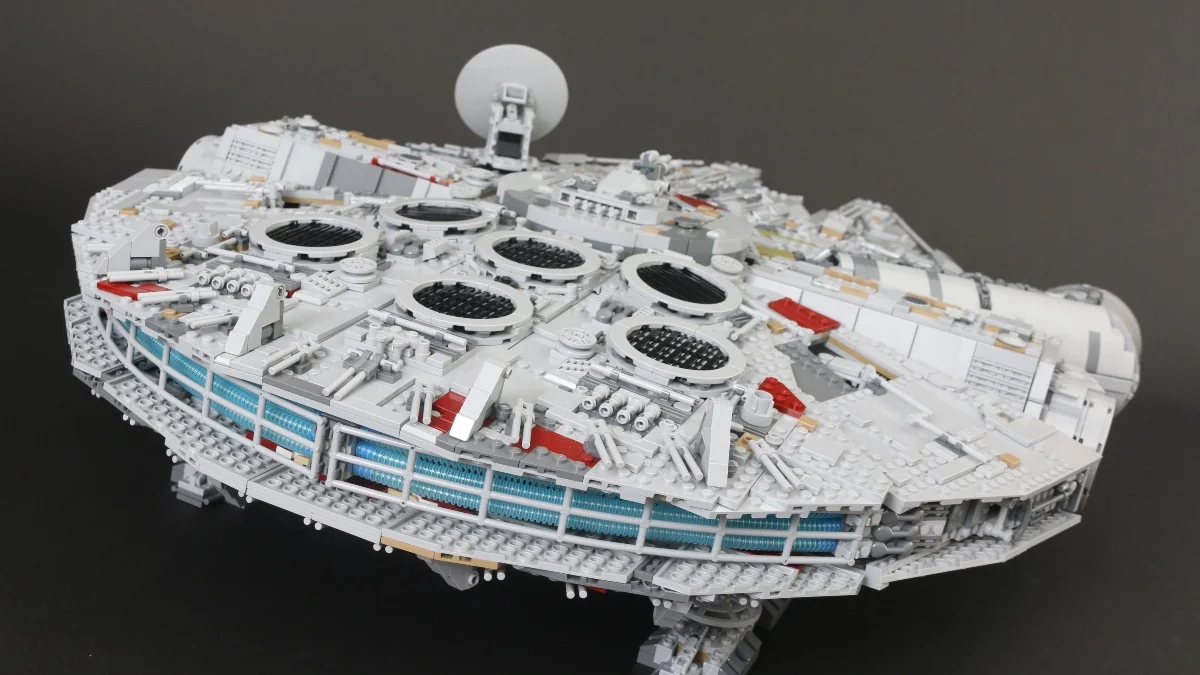
LEGO's 75192 UCS Millennium Falcon — 7,541 pieces, $849.99, and the flagship of the entire modern UCS program — is in its confirmed final retirement window after an extraordinary nine-year production run. Retirement is the one resale catalyst in this hobby with a genuinely repeatable structure. It is also the one people most reliably play wrong.
Everything else we forecast rides a hype curve: attention spikes at release, decays on a half-life, and the sell window sits weeks after the drop. LEGO retirement inverts the whole shape. The catalyst isn't the product appearing — it's the product disappearing forever while its audience keeps growing. Star Wars recruits new adult builders every year; after retirement, none of them can buy a new Falcon at retail, ever. Supply is fixed at whatever sealed copies exist the day production stops; demand compounds. That's why our Sell-Window model gives LEGO the slowest decay profile we track (90-day premium half-life, 30-day peak), and why for retirement plays specifically, the model's usual "sell within weeks" logic explicitly does not apply.
Three things make this retirement unusual even by UCS standards. Nine years of production means a lot of sealed supply exists — this will not be a scarce set on day one of retirement, and anyone expecting an instant pop is early by 12-24 months. Second, its $849.99 price anchored the entire big-set market; its successor (whenever LEGO does a next-generation Falcon) will almost certainly launch higher, which drags 75192's ceiling up with it. Third, the historical comp is nearly perfect: the previous UCS Falcon, 10179, retired in 2010 around $500 and traded above $3,500 sealed within five years — the single most famous appreciation story in the category, and the reason "buy Falcons at retirement" became folk wisdom at all.
The trade has three phases. Accumulation: the final months before shelf-pull, when LEGO's own "retiring soon" flag and double-VIP-point promotions let you stack effective discounts on a set that is about to stop existing — this is now. The dead zone: the 6-18 months post-retirement when clearance stock and panic-sellers cap the price; this is where impatient holders leak out at +20% and eat fees. The re-rating: begins when casual sealed supply thins and every listing is a dedicated reseller's — with a nine-year run's worth of supply, expect 75192's dead zone at the long end of that range. The 10179 curve had the same shape; it just looks vertical in hindsight.
Honest failure modes: LEGO re-releases (10179 itself got a spiritual re-release — as 75192 — which capped 10179's used market; a 2030s Falcon does the same to this one's ceiling). Storage reality: an 18-pound, meter-long sealed box held for three years has real carry cost, and crushed corners take 30% off sealed value. And opportunity cost — capital parked in the dead zone is capital not cycling through faster flips. Retirement plays are for the patient end of your bankroll, not the flip float.
We track the retirement window and the live comp trail on the 75192 forecast page.
The Journal is DropForecast's editorial layer: desk-bylined analysis written on top of the site's own tracked data and models, edited and published by the operator. Desk names are house pen names, not individual staff. Every number cites our own boards, and every call referenced here gets graded in public on the scoreboard.
